CARIBBEAN
SPATIAL JUSTICE


Gulf Coast 2050
Workshop and Symposium
2026
Organized by the LSU School of Architecture and the
Caribbean Spatial Justice Lab, the Gulf Coast 2050 All-School Workshop is a three-day experiment in collective foresight. It convenes students, faculty, and leading voices in architecture, landscape architecture, engineering, social sciences, humanities, and coastal sciences to visualize possible futures. The event puts a special emphasis on storytellers who can turn evidence into provocative narratives to guide society into the second half of this century.
JAN 28
Dasjon Jordan
Opening Lecture
3:30 pm to 4:45 pm
Student Union,
Magnolia Room
JAN 29-30
Gulf Coast 2050 Workshop
9:00am to 4:30pm
Student Union,
Royal Cotillion Ballroom
JAN 30
Reception & Exhibition
5:00pm to 6:00pm
Julian T. White Hall
JAN 31
Gulf Coast 2050 Symposium
8:50 am to 12:10 pm
Honors College Sternberg Salon
Broad Community Connections
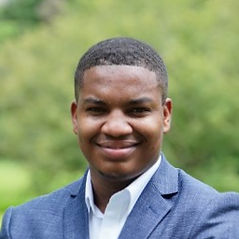
Dasjon Jordan
Dasjon Jordan is a New Orleans-born community organizer, urban planner, and designer committed to building economic and community power in opportunity neighborhoods. He serves as Executive Director of Broad Community Connections (BCC), where he leads place-based initiatives focused on community organizing, community wealth building, and narrative change along the Broad Street corridor and surrounding neighborhoods.
Dasjon’s work sits at the intersection of urban planning, cultural strategy, and economic justice. He specializes in commercial corridor revitalization that supports small business ecosystems—from capital access and marketing to design and policy reform. His projects span the U.S., South Africa, and Mexico, always rooted in the belief that development must be led by those most impacted.
He is also an Adjunct Lecturer at Tulane University School of Architecture’s Albert and Tina Small Center for Collaborative Design, where he co-leads a graduate seminar on commercial corridor revitalization. There, he guides student projects integrating economic development with community-centered design, district analysis, and implementation planning.
Previously, Dasjon served as Strategy and Development Officer at Ujamaa Economic Development Corporation, where he managed the design and construction of Phase 1 of the Claiborne Cultural Innovation District Marketplace—a cultural and economic justice project at the center of a 19-block reclamation and redevelopment effort beneath the Claiborne Expressway in Tremé, the country’s oldest Black neighborhood. His work included stewardship of New Orleans’s first federal Economic Development Administration grant to support the project.
He was also a post-graduate fellow at the Massachusetts Institute of Technology (MIT) Community Innovators Lab, where he focused on racial equity, civic pedagogy, and planning practice.
Dasjon holds a Master’s in City Planning from MIT and a Bachelor’s in Architecture from Louisiana State University.
He is passionate about history, imagination, and entrepreneurship as essential tools for community self-determination. His work is about more than buildings or programs—it’s about reviving civic engagement, developing grounded visionaries, and creating conditions for communities to build power on their own terms.
Dasjon also serves as Vice Chair of the New Orleans City Planning Commission and sits on the boards of People’s Housing+ and Rose Community Development Corporation—organizations where he is committed to expanding affordable housing and homeownership, advancing just urban planning, and supporting mission-driven real estate development.

The Gulf Coast 2050 Workshop and Symposium will host guests from a broad range of countries, institutions, and expertise.
Gulf Coast 2050 Guests
Workshop Leaders and Symposium Participants

Tulane University
Tori Bush

Louisiana State University
Marty Miller
Universitè d’Etat d’ Haïti
Madoche Jean Louis
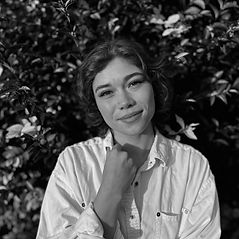
University of California, Berkeley
Casey Jones

University of Cincinnati
Anca Matyiku

Universitat Politècnica de València
Vanessa Moscardó Garcia
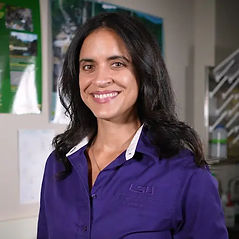
Louisiana State University
Rebeca de Jesus Crespo

Pratt Institute
Sophonie Joseph

Louisiana State University
Brendan Harmon
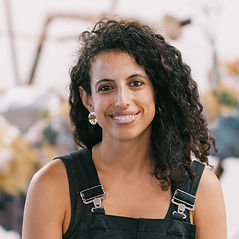
Artist
Hannah Chalew

Moffatt & Nichol
Haley Blakeman
Tulane University + Artist
Brandon Ballengée

Louisiana State University
Nolonda Jones
_edited.jpg)
Louisiana State University
Thomas H. Douthat

Louisiana State University
Hannah Hopewell

Massachusetts Institute of Technology
Dylan Roth

Workshop
Possible Futures
Twenty-five years into the century, the scorecard is rough. We face large conflicts, vanishing species, rising inequality, runaway technology, climate change, and ethical crises. Without a change in course, what does 2050 look like? How bad can our future get?
Now flip the script. What if we take the right decisions, and soon? What if the next few years deliver a radical shift that improves life for every living being, human and more than human? Picture that world in 2050. Imagine a quarter century of bold choices. As Dr. Ayana Elizabeth Johnson asks, “what if we get it right?” What does it feel like living there?
We focus on the Gulf Coast. Few places face higher stakes. How do communities learn to weather stronger hurricanes instead of being erased by them? What industries are transformed to address social needs and climates? How do landscapes become regenerative mosaics? Where do we design flourishing and balanced ecosystems? What structures and infrastructures become the new commons? How is culture protected and encouraged to grow amidst these grand experiments?
This workshop asks you to work on a real-world site that is vulnerable to climate risks to propose a speculative context within which you will imagine future conditions and architectural responses. Your output is a multilayered scenario combining critical mapping and digital collage. Tie ideas to specific sites along the Gulf Coast. Show the regional system, then zoom into the key factors that could change the future of your selected case. Use storytelling through different layers to reveal forces, actors, flows, habitats, risks, materials, and rituals. Combine graphics to create a cohesive narrative that makes your vision tangible.
This is not fantasy. It is a practice of evidence-based foresight. You will learn from leading thinkers in talks and then work shoulder to shoulder with them during the workshop to strengthen and broaden your vision. Architecture is interdisciplinary by nature. We might be among the best situated to to face such a complex task. Architecture is world building.. You will team with voices from ecology, public health, engineering, social sciences, the arts and many more to connect beyond our usual comfort zone and build scenarios that stand up to real
challenges of implementation. If not you, who. If not now, when. Bring your craft, your courage, your empathy, and your rigor. Design the Gulf Coast 2050 that you want to inherit and prove how we get there.